
If you’re thinking about selling your Arizona home, one of your first questions is probably: How long will it take?
It’s a reasonable question, especially if you’re relocating, purchasing another home, dealing with an inherited property, or simply ready to move on.
You may have heard stories about homes selling within days of being listed. While that can happen, it’s not necessarily what today’s Arizona homeowners should expect.
The reality is that selling a home in Arizona can take three to four months from preparation to closing, and sometimes considerably longer.
The timeline depends on your asking price, property condition, location, buyer demand, and how smoothly the transaction proceeds once you accept an offer.
Let’s take a realistic look at what Arizona sellers can expect.
How Long Are Arizona Homes Staying on the Market in 2026?
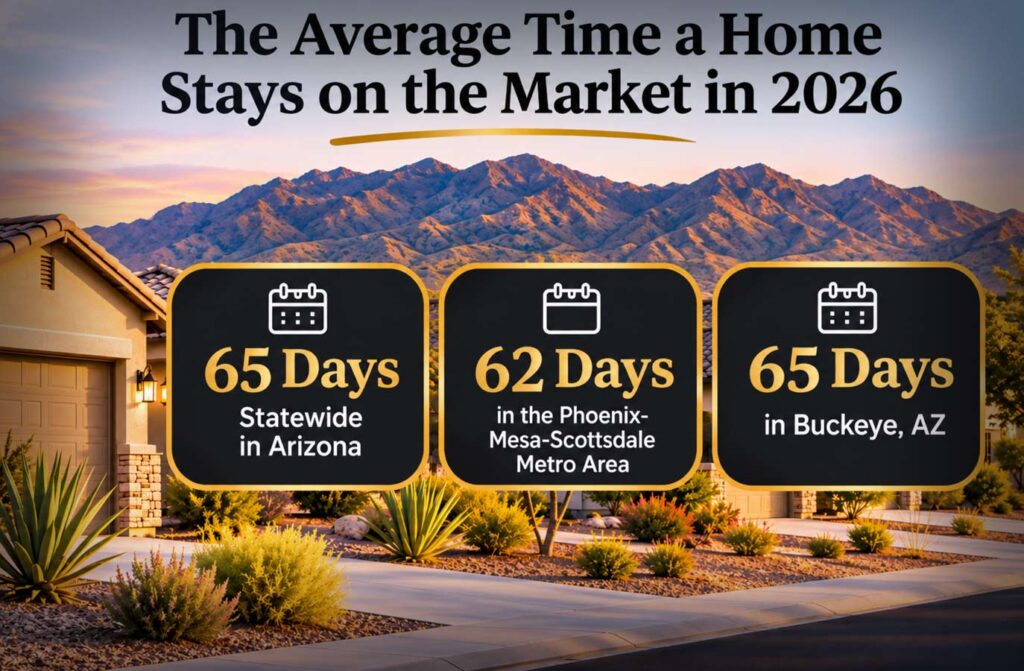
According to Realtor.com housing data for September 2026, the median time on market was approximately:
65 days statewide in Arizona
62 days in the Phoenix-Mesa-Scottsdale metropolitan area
65 days in Buckeye, Arizona
These figures represent how long homes are being marketed, not a guarantee of when a particular property will sell or when the seller will receive their money.
And there’s another important consideration: The time spent marketing your property is only one part of the selling process.
Once you accept an offer, the transaction still needs to make it through inspections, financing, appraisal, title work, and escrow.
That can add another 30–45 days to the process for a typical financed transaction.
For homeowners planning a move or coordinating the purchase of another property, understanding the full timeline is essential.
Sources: Realtor.com housing inventory data, September 2026, published through the Federal Reserve Economic Data (FRED) database.
The Realistic Timeline for Selling a House in Arizona
STAGE
1
Preparing Your Home for Sale (1–3 Weeks)
.
Before your home goes on the market, there is usually some preparation involved.
Depending on the property’s condition, this may include:
- Completing minor repairs and maintenance
- Cleaning and decluttering
- Addressing landscaping and curb appeal
- Scheduling professional photography
- Reviewing comparable home sales
- Determining a competitive listing price
Some properties are ready to list almost immediately. Others may need several weeks of preparation.
In Arizona, paying attention to the condition of the air conditioning system, landscaping, roofing, and exterior appearance can be particularly important.
Buyers are often comparing several properties, and first impressions matter.
STAGE
2
Finding a Buyer (30–90+ Days)
.
This is where the timeline becomes less predictable.
A competitively priced, well-maintained home in a desirable neighborhood may attract an offer relatively quickly.
Another property may sit for 60, 90, or even 120 days without receiving an acceptable offer.
Why?
Because buyers aren’t just looking at your home. They’re comparing it against every other available property within their price range.
They may also be comparing resale homes with new construction communities offering builder incentives, financing promotions, or upgrades.
In areas such as Buckeye, Goodyear, Avondale, Surprise, and Litchfield Park, that competition can influence how quickly a property sells.
The important thing to remember is that being listed for sale doesn’t automatically mean your home is positioned to sell.
Pricing, presentation, marketing, and current buyer demand all work together.
STAGE
3
Accepting an Offer and Entering Escrow (Approximately 30–45 Days)
.
Receiving an offer is exciting, but the sale isn’t complete. After the seller accepts an offer, the property typically enters escrow.
During this period, several things need to happen:
HOME INSPECTION: Under the standard Arizona REALTORS® residential resale contract, buyers generally have a 10-day inspection period unless a different period is negotiated. They may request repairs, negotiate concessions, or exercise applicable cancellation rights.
APPRAISAL: If the buyer is financing the purchase, the lender may require an appraisal to determine whether the property supports the agreed-upon purchase price.
LOAN APPROVAL: Even a buyer with a mortgage preapproval must complete the lender’s underwriting process.
TITLE & HOA DOCUMENTATION: Title issues, outstanding liens, and required homeowners association documents must be addressed. Arizona has specific requirements and deadlines for HOA resale disclosures.
FINAL WALKTHROUGH & CLOSING: The buyer typically completes a final walkthrough before the transaction closes.
Any of these steps can create delays.
A transaction scheduled to close in 30 days may take longer if financing complications, repair negotiations, or documentation issues arise.
STAGE
4
Closing and Receiving Your Proceeds
.
Once all closing requirements are satisfied, the necessary documents are signed, the transaction is funded, and the deed is recorded.
After closing, the seller receives the proceeds remaining after mortgage payoffs, closing expenses, commissions, and other applicable charges.
Until those steps are completed, the sale isn’t final.
This is why homeowners should avoid making major financial commitments based solely on an anticipated closing date.
Why Are Some Arizona Homes Taking So Long to Sell?
One of the biggest misconceptions about selling a home is that time alone will eventually produce the right buyer.
Unfortunately, that isn’t always true.
There are several reasons a property may remain on the market longer than expected.
1. The Asking Price Is Too High
This is one of the most important factors affecting how quickly a home sells.
Homeowners naturally want to maximize their return. After all, their property may represent years of mortgage payments, improvements, and personal investment.
But buyers don’t determine value based on how much a homeowner has invested or how much they hope to receive.
They compare the property with other available homes and recent sales.
For example, if similar homes in your neighborhood are selling for $375,000, listing yours at $425,000 without meaningful differences may significantly reduce buyer interest.
Even if the property is beautiful, buyers may simply choose another home.
An overpriced home can sit on the market for months while appropriately priced competing properties sell.
And the longer it sits, the more buyers may begin wondering why it hasn’t sold.
2. Buyers Have More Choices
When inventory increases, buyers have more opportunities to compare homes, negotiate prices, and request concessions.
According to the October 2026 Arizona Regional Multiple Listing Service (ARMLS) market report, the market had approximately 4.45 months of housing supply.
That doesn’t mean every community is experiencing the same conditions, but it does show why sellers need to pay attention to competition.
Buyers may be considering multiple homes with similar floor plans, square footage, and amenities.
Your home needs to offer a compelling combination of price, condition, and location.
3. The Property Needs Repairs or Updates
A home doesn’t have to be completely remodeled to sell.
However, deferred maintenance can affect buyer confidence.
In Arizona, buyers may be especially concerned about:
- Aging or poorly maintained air conditioning systems
- Roof condition
- Plumbing issues
- Outdated flooring or finishes
- Landscaping problems
- Visible signs of water damage
Some buyers are comfortable purchasing a property that needs work, but they will often expect the asking price to reflect those repairs.
4. New Construction Competition
This is particularly relevant in growing West Valley communities such as Buckeye and Goodyear.
Resale homes may compete with newly constructed properties offering builder incentives, interest-rate buydowns, closing cost assistance, or upgraded features.
A homeowner selling a resale property needs to understand what builders are offering nearby.
Sometimes a resale home offers advantages such as established landscaping, window coverings, appliances, or a completed backyard.
Those features should be highlighted when marketing the property.
5. Limited Showing Availability
Buyers need opportunities to see your home.
Restrictive showing schedules, short-notice requirements, or frequent cancellations can make it more difficult to attract offers.
Although sellers understandably want to minimize disruptions, making the property reasonably accessible can help maintain buyer interest.

Does It Take Longer to Sell a Home in Buckeye, Goodyear, or Avondale?
The answer depends on the neighborhood, property type, price range, and competition.
Even communities located just a few miles apart can experience different market conditions.
- SELLING A HOME IN BUCKEYE, ARIZONA:
Buckeye continues to attract buyers interested in growing communities, newer homes, and opportunities in the West Valley.However, resale properties may compete with new construction developments, particularly in neighborhoods where builders have substantial available inventory.
Pricing a resale property without considering nearby builder incentives can make selling more challenging..
- SELLING A HOME IN GOODYEAR, ARIZONA:
Goodyear offers a variety of neighborhoods, from established communities to newer developments. Homes in different price ranges may attract different groups of buyers.
A property in a highly desirable neighborhood may perform differently from a similarly priced home facing significant nearby competition.
. - SELLING A HOME IN AVONDALE, ARIZONA:
Avondale offers established residential neighborhoods and access to major West Valley employment and transportation corridors.As with other communities, pricing and property condition play an important role in attracting buyers.
The bottom line: There isn’t one selling timeline that applies equally to every Arizona city.
A realistic estimate should be based on recent comparable sales, current active listings, and the specific neighborhood where your property is located.
What Happens If Your House Has Been Listed for 90 Days Without Selling?
If your home has been on the market for three months without an acceptable offer, it’s time to evaluate what’s happening.
That doesn’t automatically mean something is wrong with your property.
However, it may indicate that your asking price, marketing strategy, property presentation, or showing availability needs adjustment.
Some important questions to consider include:
- How many showings has the property received?
- What feedback are potential buyers providing?
- Have comparable homes sold during the same period?
- Have competing sellers reduced their prices?
- Are nearby builders offering incentives?
- Is the asking price still supported by current market conditions?
One of the biggest mistakes a seller can make is waiting indefinitely without reviewing the strategy.
Sometimes a price adjustment is necessary. Other times, improvements to marketing or property presentation may help.
The goal should be to make informed decisions based on current market activity rather than simply hoping the next buyer will offer the original asking price.
.
.
Five Ways to Help Your Arizona Home Sell Faster
Although no real estate agent can guarantee how quickly a property will sell, there are steps homeowners can take to improve their chances.
1. Price Your Home Competitively From the Beginning
The initial listing period is an important opportunity to attract attention.
A realistic asking price supported by comparable sales and current competition can help generate stronger interest.
2. Make a Good First Impression
Cleanliness, landscaping, lighting, and professional photography all contribute to how buyers perceive a property.
3. Address Obvious Maintenance Issues
Fixing smaller problems before listing may help prevent buyers from becoming concerned about larger, hidden issues.
4. Make Showings as Convenient as Possible
Reasonable flexibility gives potential buyers more opportunities to view the home.
5. Be Prepared to Negotiate
An offer below asking price doesn’t necessarily mean the buyer isn’t serious.
Depending on the market, negotiations involving price, repairs, closing costs, or concessions may help bring a transaction together.
The strongest selling strategy balances the seller’s financial goals with what current buyers are willing to pay.
?
Should You Sell Your Arizona Home or Rent It Out Instead?
What if selling right now isn’t your best option?
.
If your property isn’t attracting offers at the price you need, renting it out may be worth exploring.
For example, a homeowner relocating for work may not need the proceeds from their current home immediately.
Rather than reducing the asking price, they may consider keeping the property as a rental until their financial circumstances or market conditions change.
However, becoming a landlord comes with responsibilities.
Before making that decision, homeowners should evaluate:
- Potential monthly rental income
- Mortgage payments, taxes, and insurance
- HOA restrictions and rental requirements
- Maintenance and repair expenses
- Vacancy risks
- Property management costs
- The financial and tax implications of selling later
Renting isn’t the right choice for everyone. It may not produce positive cash flow, and there’s no guarantee that property values will increase.
But for some homeowners, it can provide an alternative to selling immediately.
At E&I Real Estate & Property Management, we work with Arizona homeowners who are considering both selling and renting their properties.
Understanding the numbers behind each option can help you make a decision that supports your long-term goals.
So, How Long Should You Realistically Plan to Sell Your House
For planning purposes, allowing approximately three to four months from preparing your home to completing the sale may be a reasonable starting point in the current market.
Some properties will sell much faster. Others may take six months or longer, especially when pricing, condition, or market competition becomes an issue.
The key is understanding that selling a home involves more than placing a sign in the yard and waiting for an offer.
A successful sale requires realistic pricing, effective marketing, communication, negotiation, and careful coordination through closing.
Most importantly, homeowners deserve realistic expectations from the beginning.
Frequently Asked QuestionsAbout Selling a House in Arizona
Below are answers to common questions from homeowners considering selling their property in Arizona.